
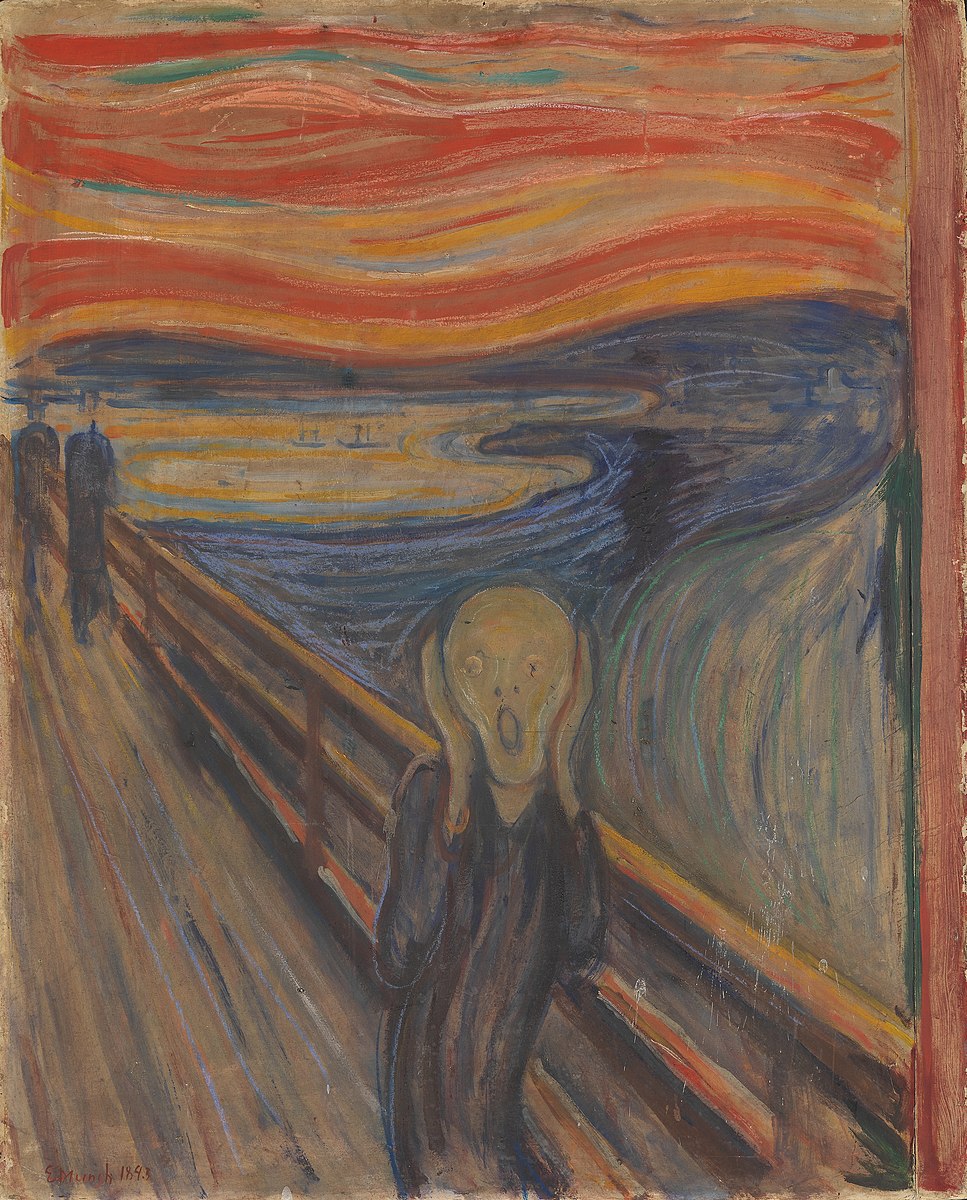
Edvard Munch (1863–1944) was a Norwegian painter and printmaker whose work had a profound impact on modern art. Born in Loten, Norway, Munch grew up in a household marked by illness and death—his mother died when he was just five, and his father later passed away. These early experiences of loss and suffering deeply influenced his artistic vision, inspiring him to explore themes of human emotion, mortality, and existential anxiety. He is best known for his iconic painting The Scream (1893), which has become a universal symbol of modern existential angst.
Munch’s artistic style evolved through Symbolism and early Expressionism, often using bold colors, dramatic lines, and evocative compositions to convey intense psychological states. His works, such as The Sick Child and Madonna, reflect his focus on human vulnerability, love, death, and alienation. He frequently revisited themes throughout his life, creating multiple versions of key works to explore different emotional nuances. His art often blurred the line between personal experience and universal human emotion, making his paintings deeply relatable across cultures and generations.
Beyond individual works, Munch’s influence on modern art was immense. He challenged traditional artistic norms by emphasizing emotional truth over realistic representation, paving the way for the Expressionist movement in Europe. During his lifetime, he exhibited across Norway and Germany, gaining recognition among avant-garde circles. Today, his legacy is preserved in institutions such as the Munch Museum in Oslo, which houses thousands of his paintings, prints, and sketches. Edvard Munch is celebrated not only for his technical skill but also for his profound insight into the human psyche, leaving a lasting imprint on the world of art.